




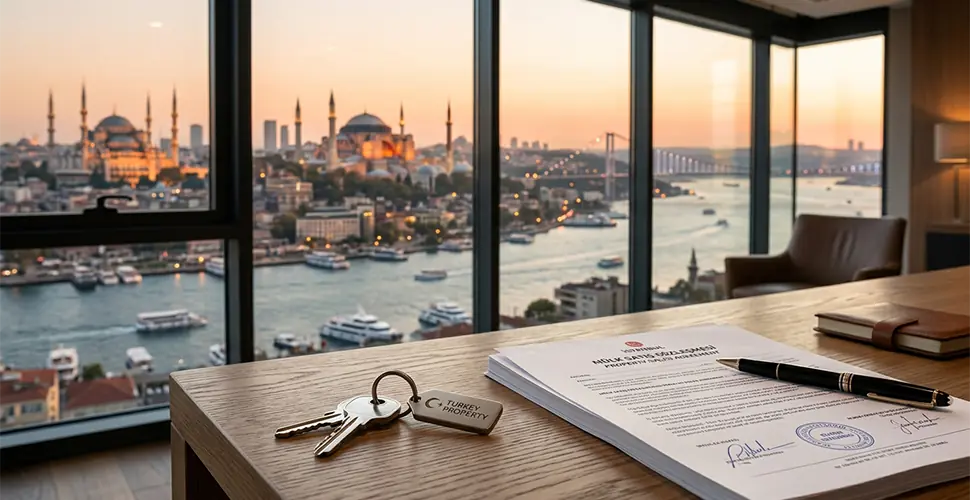
Yes, foreigners can legally buy property in Turkey without holding a prior residence permit. Under Article 35 of the Turkish Land Registry Law (Law No. 2644), citizens of most countries are eligible to purchase real estate. However, acquiring property requires navigating specific administrative protocols, including land-registry checks, mandatory property valuation, and formal currency exchange procedures.
This comprehensive guide covers the entire property acquisition process—from understanding closing costs and legal due diligence to navigating Istanbul's real estate landscape and distinguishing between property-based residency and Turkish citizenship.
Can Foreigners Buy Property in Turkey?
Turkey’s real estate market operates with relatively few barriers for international buyers, but specific statutory limitations apply.
- Who Can Buy Property: Following the abolition of the reciprocity rule in 2012, citizens of most nations can purchase property. A designated cabinet list specifies the nationalities restricted from buying due to international diplomatic relations.
- Do You Need a Residence Permit?: No prior residency is required. Legal entry into Turkey and valid identification are sufficient to initiate and complete a property purchase.
- Property Ownership Limits: A foreign individual can purchase up to a maximum of 30 hectares of real estate nationwide.
- Land Development Rule: If a foreign natural person acquires land without established buildings (such as agricultural land or vacant plots), they must submit an architectural or agricultural development project to the relevant ministry within two years.
- District Ownership Limits: The total area of properties owned by foreign nationals in a single municipal district cannot exceed 10% of that district's privately owned land area.
- Military and Security Restrictions: Foreigners cannot acquire property located within designated military forbidden zones and security areas. The Land Registry Office (Tapu) conducts administrative checks to ensure compliance.
- Restricted Areas for Residency: The Directorate General of Migration Management restricts new foreign address registrations in neighborhoods where the foreign population exceeds statutory density thresholds. You can legally purchase a property and obtain a title deed in these areas, but you generally cannot use that property to apply for a residence permit.
How Much Does It Cost to Buy a House in Turkey?
Additional purchase costs vary significantly depending on the property, transaction structure, VAT status, agent fees, and professional services. Budgeting accurately requires evaluating these factors individually.
Property Purchase Price
The agreed-upon value of the real estate. For foreign buyers, the transaction value is subject to the applicable valuation and foreign-currency conversion requirements, including the mandatory Valuation Report and DAB.
Tapu Transfer Fee (Title Deed Tax)
The statutory title deed transfer tax is 4% of the declared property value. Under Turkish law, this liability is shared equally between buyer (2%) and seller (2%), unless otherwise agreed in writing. In standard market practice, the allocation is subject to negotiation, and contracts frequently assign the full 4% to the buyer.
Real Estate Agent Commission
Real estate agencies may charge a total service fee of up to 4% of the sale price, excluding VAT. Unless otherwise agreed in writing, the fee is generally shared equally between buyer and seller (2% each).
VAT (KDV), When Applicable
VAT may apply to certain property transactions, particularly purchases from developers. The applicable rate and eligibility for a foreign-buyer VAT exemption depend on the property's legal classification, its size, and the specific transaction conditions.
Valuation Report Costs
An independent appraisal report prepared by a Capital Markets Board (SPK)-licensed valuation company is mandatory for foreign buyers. This report is subject to an administrative fee and is generally accepted for transactions for up to three months from the date of issuance, subject to the applicable Land Registry rules.
Translation and Notary Fees
A sworn translator is legally required at the Tapu office for non-Turkish speakers. Document translations and the issuance of a Power of Attorney (POA) generate notary and translation fees that vary based on document length and official tariffs.
Mandatory Earthquake Insurance (DASK)
Registering a title deed or setting up residential utilities requires an active DASK policy. The annual premium depends on the property’s structural characteristics, size, and geographic risk zone.
Legal and Ongoing Property Costs
- Independent Lawyer Fees: Professional fees for conducting independent property due diligence and contract review.
- Annual Property Tax (Emlak Vergisi): Paid to the local municipality, generally calculated as a small percentage (0.1% to 0.2%) of the municipality's assessed value.
- Monthly Maintenance (Aidat): Fees paid to building management for the upkeep of common areas and shared amenities.
Illustrative Example — $150,000 Resale Apartment
| Cost Component | Illustrative Basis | Estimated Cost |
|---|---|---|
| Property purchase price | Base transaction | $150,000 |
| Tapu transfer fee | Illustrative buyer's share (e.g., 2% assumed) | $3,000 |
| Agency fee | Assumed 2% share + VAT | ~$3,600 |
| Valuation report | Administrative appraisal fee | Variable |
| Notary & certified translation | Official document verification | Variable |
| DASK insurance | Mandatory annual policy | Variable |
| Other administrative fees | Title deed registry and banking charges | Variable |
| Estimated additional costs | Transaction-dependent total | Variable |
What Documents Do Foreigners Need to Buy Property in Turkey?
Prepare the following foundational documents before initiating a transaction:
- Valid Passport: Valid identification for legal entry and official transactions in Turkey.
- Certified Turkish Translation of Passport/ID, Where Required: A translation prepared by a sworn translator and certified by a Turkish Notary Public (typically required where identity documents are not in the Latin alphabet or where requested by the local land registry).
- Turkish Tax Number (Vergi Numarası): A 10-digit tax identification number obtained online via the Turkish Revenue Administration portal or in person at any local tax office.
- Power of Attorney (If Applicable): If executing the purchase through a legal representative, a specific real estate POA must be issued through a Turkish Notary or a Turkish foreign mission abroad.
- Biometric Photographs: Recent photographs as required by the Land Registry Office.
How to Buy a Property in Turkey Step by Step
1. Set Your Budget and Define Your Goal
Clarify your legal objective at the outset: investment yield, personal residence, or meeting the legal requirements for property-based residency or Turkish citizenship. The procedural requirements and property checks differ based on this goal.
2. Choose the Right Type of Property
If you are wondering how to buy an apartment in Turkey, the legal transfer process is broadly the same as buying a villa, a unit in a residential complex, or an off-plan development. Select the category that aligns with your budget and ongoing maintenance preferences.
3. Find a Property and Verify the Seller
Once a property is selected, verify that the seller’s identity strictly matches the legal owner recorded on the official title deed (Tapu).
4. Conduct Legal and Property Due Diligence
Have an independent lawyer examine the land registry records for:
- Encumbrances: Outstanding mortgages (İpotek), court injunctions (Haciz), or tax liens.
- Deed Status: Ensuring the property has full fractional ownership (Kat Mülkiyeti) rather than merely construction servitude (Kat İrtifakı).
- Habitation Certificate (İskan): Verifying that the building has received municipal occupancy approval.
- Tenant Status: Checking for active tenancy agreements and notarized eviction undertakings (Tahliye Taahhütnamesi), as Turkish tenancy laws provide strong legal protections to tenants.
5. Obtain the Required Property Valuation
Commission an appraisal from an SPK-licensed valuation firm. The valuation report is used as part of the Land Registry process to assess the property's value against the transaction.
6. Get a Turkish Tax Number and Arrange Payment
Secure your tax number and set up the necessary financial channels. While opening a domestic bank account is not an absolute legal requirement to buy, it substantially streamlines currency exchange, tax payments, and utility setup.
7. Complete the Currency Exchange Procedures (DAB)
Foreign buyers must complete the required foreign-currency conversion through a Turkish bank and obtain a Döviz Alım Belgesi (DAB) before the title deed transfer. This certificate confirms the sale of foreign currency to the banking system and must be presented to the Tapu office.
8. Review and Sign the Sales Agreement
Have your lawyer review the preliminary sales contract or reservation agreement. Any deposit payments should be made through formal banking channels with clear reference notes.
9. Apply for the Tapu Transfer
Submit the transfer application to the local Land Registry Office (Tapu ve Kadastro Müdürlüğü) along with the DAB, valuation report, identity translations, and application forms.
10. Pay Required Fees and Use the Secure Payment System
- Secure Payment System (Güvenli Ödeme Sistemi): From October 1, 2026, qualifying property-sale payments made by cash, bank transfer, or electronic funds transfer are subject to the mandatory Secure Payment System. This system is designed to ensure the simultaneous transfer of the purchase price and property ownership upon completion of the title deed transaction.
- Taxes and Fees: Pay the statutory title deed transfer fee and local revolving fund fees (Döner Sermaye) via designated banking channels following the Tapu office's SMS notification.
11. Complete the Tapu Transfer and Receive Your Title Deed
Both parties (or their authorized attorneys) attend the scheduled appointment at the Land Registry Office. If the buyer does not speak Turkish, an official sworn translator must be present. Once declarations are confirmed and registry books signed, the official title deed is issued.
12. Complete Post-Purchase Formalities
Activate mandatory DASK earthquake insurance, transfer utility connections (water, electricity, gas) into your name, register the asset with the local municipality for annual property taxes, and complete civil address registration where applicable.
How to Buy a House in Istanbul
Istanbul represents Turkey's largest and most diverse property market, spanning two continents with distinct regulatory and geographic dynamics.
European Side vs. Asian Side
The European side serves as the primary commercial, financial, and tourism center, with high urban density and a wide selection of large-scale modern developments. The Asian side offers a more established residential environment with extensive coastal corridors, green spaces, and a generally calmer pace of living.
How to Choose the Right Area in Istanbul
Target districts based on structured criteria rather than marketing names:
- Luxury & Central Living: Maslak, within Istanbul's Sarıyer district, is a major business and high-end residential area concentrating premium towers and corporate headquarters.
- Family-Oriented Living: Çekmeköy is an independent main district on the Asian side known for lower-density zoning, villa communities, and proximity to green corridors.
- Transport & Daily Convenience: Bakırköy is an established independent district on the European side that combines coastal access with major transport connections (Marmaray, Metro, and bus transit).
- Rental & Investment Hubs: Districts such as Küçükçekmece and Ümraniye offer access to major employment, education, and transportation nodes that can support rental demand.
- Developing Suburbs: Outer districts such as Esenyurt or Pendik offer modern residential developments at lower price points per square meter.
What to Check Before Buying Property in Istanbul
- Structural Integrity and Seismic Standards: Check the building's construction date, applicable seismic building code, structural condition, and any subsequent engineering inspections or reinforcement work.
- Urban Transformation (Kentsel Dönüşüm): Verify whether an older building has been officially classified as risky or slated for redevelopment under municipal urban renewal programs.
- Transit Proximity: Walking distance to established rail infrastructure (Metro, Marmaray, or Metrobus lines) directly influences property liquidity and tenant accessibility.
- Maintenance (Aidat) Obligations: Review the monthly service fees charged by residential towers or full-facility developments, which must be paid regardless of occupancy.
Buying an Apartment vs. House vs. Villa in Turkey
| Property Type | Best Suited For | Main Advantages | Main Considerations & Risks |
|---|---|---|---|
| Standard Apartment | City dwellers, core residential budgets | Lower entry costs, established central locations, lower monthly aidat. | Limited on-site amenities, older infrastructure in central quarters. |
| Residential Complex | Families, long-term living | Gated security, landscaped common areas, on-site facilities, designated parking. | Higher monthly maintenance (aidat) charges. |
| Residence Tower | Urban professionals, lock-and-leave owners | Central business locations, concierge and reception services. | Higher ongoing maintenance fees, limited private outdoor areas. |
| Standalone Villa | Large families, buyers seeking privacy | Private grounds, independent living space, dedicated outdoor amenities. | Higher acquisition cost, private maintenance responsibilities, peripheral locations. |
Can Foreigners Get a Mortgage to Buy Property in Turkey?
Turkish commercial banks are legally permitted to offer mortgage products to foreign nationals, typically funding a portion of the property's appraised valuation. However, prevailing macroeconomic conditions and high interest rates mean retail mortgages are less commonly utilized by foreign purchasers.
As an alternative, many international buyers utilize structured installment plans offered directly by property developers for new-build or off-plan projects, which typically involve a down payment followed by scheduled installment payments over an agreed timeframe.
Can Buying Property in Turkey Give You Residency or Citizenship?
A property-based residence permit and Turkish citizenship by investment are distinct legal processes with entirely separate criteria, financial thresholds, and legal outcomes.
Property-Based Residence Permit (İkamet)
Foreigners can apply for a short-term residence permit based on real estate ownership under specific statutory criteria:
- Financial Threshold: As of 2026, the property must have a value of at least USD 200,000 (or its equivalent in Turkish Lira) at the date of acquisition, verified in accordance with official procedures.
- Usage Conditions: The property must be used as the applicant's residence and must meet applicable residential and address-registration requirements. It cannot be situated within a closed neighborhood.
Turkish Citizenship by Investment
The citizenship program allows qualified investors to acquire Turkish nationality without an ongoing physical residence requirement.
- The $400,000 Route: The acquisition must involve real estate with a total minimum value of $400,000 (or foreign currency equivalent), verified through an official valuation report and the corresponding DAB exchange certificate.
- The 3-Year Holding Requirement: A formal annotation must be recorded in the land registry stating that the property will not be sold for at least three years.
Note: Fulfilling the investment threshold is an eligibility criterion, not an automatic guarantee of citizenship or residency. Applications remain subject to administrative scrutiny, national security clearance, and official approval.
Common Mistakes When Buying Property in Turkey
- Omitting Independent Legal Counsel: Proceeding without an independent Turkish lawyer to run title searches and confirm ownership.
- Paying Deposits Without Formal Terms: Transferring funds before title due diligence is complete and without a legally binding agreement.
- Overlooking the Habitation Certificate (İskan): Acquiring a property that lacks an İskan, which can lead to higher utility tariff structures and administrative hurdles.
- Encountering the Appraisal Gap: Discovering that the official SPK valuation report yields a value significantly below the agreed purchase price, which can compromise residency or citizenship applications.
- Purchasing Without Tenant Verification: Acquiring a tenanted home without a formal, notarized eviction undertaking, making immediate personal occupancy difficult under Turkish tenant protection laws.
- Assuming Automatic Permit Eligibility: Assuming every completed real estate purchase qualifies for a residence permit without verifying the neighborhood status and valuation threshold.
Things to Consider Before Buying Property in Turkey
- Rental Yield Variations: Gross rental returns are subject to tenant turnover, regular maintenance, management costs, and local rental regulations.
- Currency Factors: While the purchase price may be calculated in foreign currency, domestic rental income and standard operating expenses are denominated in Turkish Lira.
- Secondary Market Liquidity: Resale velocity varies significantly between high-demand transit-connected apartments and large properties in peripheral suburbs.
- Ongoing Maintenance Charges: Monthly aidat fees in full-amenity developments must be factored into net return projections.
Turkey Property Buying Checklist
- Define your purchase objective (lifestyle, investment, residency, or citizenship).
- Retain an independent, licensed Turkish real estate lawyer.
- Verify the seller's legal title and ownership records at the Land Registry.
- Check for liens, mortgages, court orders, or unpaid municipal debts on the title.
- Confirm that the building possesses an occupancy permit (İskan).
- Obtain a formal valuation report from an SPK-licensed appraiser.
- Acquire a Turkish Tax Number.
- Complete the required currency conversion and obtain the DAB from a Turkish bank.
- Have your lawyer review the sales contract before transferring funds.
- Complete the payment through the Secure Payment System (Güvenli Ödeme Sistemi), where applicable.
- Attend the Land Registry Office appointment to sign the title deed transfer.
- Secure mandatory DASK earthquake insurance.
- Register the property with the local municipality and transfer utilities.
Frequently Asked Questions
Can foreigners buy a house in Turkey?
Yes, citizens of eligible countries can legally purchase real estate in Turkey, subject to statutory limits such as the 30-hectare nationwide ceiling and military zone restrictions.
Can I buy property in Turkey without a residence permit?
Yes. A Turkish residence permit is not a prerequisite for purchasing real estate. Foreign buyers must still provide the identification and transaction documents required by the Land Registry, which may include a passport or ID, tax number, valuation documents, DASK, photographs, and other transaction-specific documents.
How much money do I need to buy a house in Turkey?
There is no single fixed percentage for all purchases. In addition to the property price, buyers may need to budget for the title deed transfer fee, agency commission, valuation, translation/notary services, DASK, legal services, and, where applicable, VAT. Specific legal paths, such as property-based residency or citizenship, have their own statutory financial thresholds.
Can I buy an apartment in Turkey as a foreigner?
Yes. Foreign nationals who are eligible to acquire property in Turkey can purchase apartments, houses, and villas, subject to general statutory and location restrictions.
Can buying property in Turkey give me citizenship?
Yes. Acquiring real estate with an aggregate value of at least $400,000 and registering a three-year non-sale commitment on the title deed allows eligible investors to apply for Turkish citizenship.
How long does it take to buy a property in Turkey?
The timeline varies depending on document preparation, appraisal scheduling, currency conversion procedures, appointment availability at the local land registry, and the specific complexity of the transaction.
Do I need a lawyer to buy property in Turkey?
Hiring a lawyer is not mandatory by law, but retaining independent legal representation is standard practice to verify title records, review contracts, and manage legal risks.
Can foreigners get a mortgage in Turkey?
Yes, foreigners can legally apply for mortgages from Turkish banks, though prevailing lending conditions and interest rates often lead buyers to prefer developer installment options.
Can foreigners own land in Turkey?
Yes, foreign individuals can own up to 30 hectares of land. If the acquired land has no constructed buildings, the owner must submit a formal development project to the relevant ministry within two years.
Can foreigners inherit property in Turkey?
Yes. Turkish inheritance law protects the inheritance rights of foreign property owners, allowing real estate to pass to legal heirs in accordance with statutory procedures.