




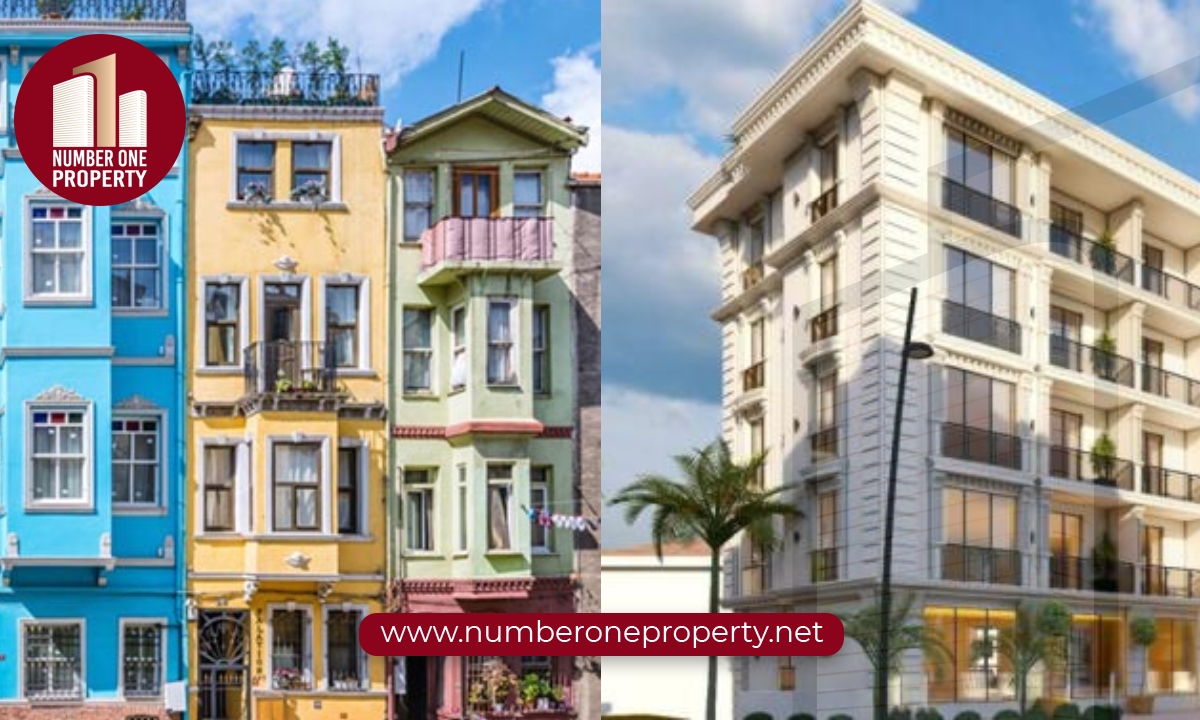
Istanbul is a captivating city where history whispers in ancient streets and modern life thrives. When finding your ideal apartment in Istanbul, a crucial decision is whether to choose a new development or a second-hand home with established charm.
This guide compares both options across price, maintenance, earthquake safety, rental performance, and long-term value, to help you make an informed choice for your budget and goals.
New vs. Second-Hand at a Glance
| Factor | New Build | Second-Hand |
|---|---|---|
| Price vs. district average | 15–30% premium | Baseline / negotiable |
| Earthquake code | TBDY 2018 (post-2019), if newly built | Depends on construction date — verify |
| Financing | Developer installment plans common | Cash or bank mortgage, full payment at transfer |
| Warranty | Structural & systems warranty from developer | None — buyer assumes as-is condition |
| Neighborhood maturity | Often in growth areas, fewer established amenities at first | Established infrastructure, transport, community |
| Renovation potential | Limited (already modern) | High — room to customize and add value |
| Typical rental yield | Slightly lower yield, faster to rent (move-in ready, amenities) | Slightly higher yield if priced right, may need updates to attract tenants |
Price Difference: New vs. Second-Hand
Citywide, average apartment prices in Istanbul run roughly $1,325–$1,755 per m², but new-build units typically carry a premium of 15–30% over comparable second-hand apartments in the same district, reflecting modern amenities, energy efficiency, and warranty coverage. This premium narrows in emerging districts and widens in established, high-demand neighborhoods.
Advantages of a New Apartment
Modern Amenities and Lower Running Costs
New builds offer contemporary layouts, energy-efficient systems, and smart-home features that reduce utility bills compared to older buildings. They also come with builder warranties covering structural elements and major systems, cutting the risk of unexpected repair costs in the first years of ownership.
Stronger Earthquake Compliance
Any building constructed after January 1, 2019 must comply with TBDY 2018 (Türkiye Bina Deprem Yönetmeliği — the Turkish Building Earthquake Code), which significantly tightened structural and soil-assessment requirements compared to the previous 2007 code. A building built under the 2007 code isn't automatically unsafe, but it was designed to less stringent standards — ask for the building's construction date and, ideally, its İskan (occupancy certificate) to confirm which code applies.
Developer Financing
Many new developments offer interest-free installment plans directly through the developer, spreading payment over the construction period. This is generally not available for second-hand properties, where full payment (or a bank mortgage) is expected at the time of transfer.
Advantages of a Second-Hand Apartment
Negotiation Room and Lower Entry Price
Unlike new developments with fixed developer pricing, second-hand sellers are often willing to negotiate on price or terms, giving buyers more room to secure a better deal or offset costs through negotiation rather than paying full asking price.
Established Neighborhoods
Second-hand apartments are concentrated in mature, well-established neighborhoods with existing infrastructure, transport links, and community life — something a brand-new development on the edge of the city often lacks in its first years.
Renovation Potential
Older apartments leave room to renovate and add value on your own terms, which can be a meaningful advantage for buyers planning to hold the property long-term or increase its resale value through targeted upgrades.
Which Should You Choose? By Buyer Type
- End-user moving in immediately: a ready second-hand apartment in an established neighborhood avoids construction delays and lets you assess the actual finished building, not renderings.
- Investor prioritizing rental income: second-hand units in proven rental neighborhoods often reach positive cash flow faster, since the entry price is lower, though a well-located new build can rent out quickly thanks to amenities and move-in-ready condition.
- Buyer pursuing citizenship by investment: the $400,000 threshold applies equally to new and second-hand properties — the choice here doesn't affect eligibility, only your budget and holding strategy over the required 3-year period.
- Buyer with a longer time horizon and renovation appetite: a second-hand property purchased below market and upgraded can outperform a new build on total return, if you're willing to manage the renovation process.
What to Check Before Deciding
- Construction date and İskan (occupancy certificate): confirms which seismic code the building was built under and that it passed municipal inspection.
- Maintenance history: for second-hand apartments, ask for records of major repairs (roof, plumbing, electrical) and the building's structural condition.
- Monthly aidat: newer developments with more amenities (pools, gyms, 24/7 security) typically carry higher aidat than older buildings with fewer shared facilities.
- Resale potential: new developments in emerging districts may take longer to appreciate than established second-hand properties in proven, high-demand neighborhoods.
Frequently Asked Questions
Does buying new vs. second-hand affect my eligibility for Turkish citizenship?
No. The $400,000 investment threshold applies equally to new and second-hand properties, as long as the SPK valuation report confirms the value and the property is held for three years.
Is a second-hand apartment automatically less earthquake-safe than a new one?
Not automatically, but it depends entirely on when it was built. Buildings constructed after January 1, 2019 must meet the stricter TBDY 2018 code; older buildings may or may not have been retrofitted since. Always ask for the construction date and any structural assessment reports.
Can I get developer financing on a second-hand apartment?
Generally no — installment plans are a developer financing tool for new and off-plan projects. Second-hand purchases are typically cash or bank mortgage, paid in full at the time of title transfer.
Which option rents out faster?
New builds with amenities and move-in-ready condition often rent faster to tenants who value convenience, while well-priced second-hand units in established neighborhoods can also rent quickly if positioned correctly and priced below market.
Conclusion
There's no universally "better" choice between a new or second-hand apartment in Istanbul — the right fit depends on your budget, risk tolerance, and goals. Buyers who value modern amenities, lower maintenance risk, and the strongest earthquake compliance often lean toward new developments; those prioritizing established neighborhoods, negotiation room, and a lower entry price often do better with second-hand properties. A qualified local real estate agent and lawyer can help you weigh these factors against a specific property before you commit.
Read Also:
Second-hand property in Istanbul